
Subang Jaya Medical Centre stands at 1 Jalan SS12/1A, in the middle of Subang Jaya, where it has been since 1985. It is a 442-bed private hospital with more than 260 specialists across more than fifty specialties, accredited by JCI, ACHSI, MSQH and SAMM, and it sees around 550,000 outpatient visits a year.
It has a habit of going first. The hospital counts Malaysia's first open-heart surgery among its milestones, along with the country's first stem cell and paediatric liver transplants, and in 2021 it performed the first same-day total knee replacement in the country.
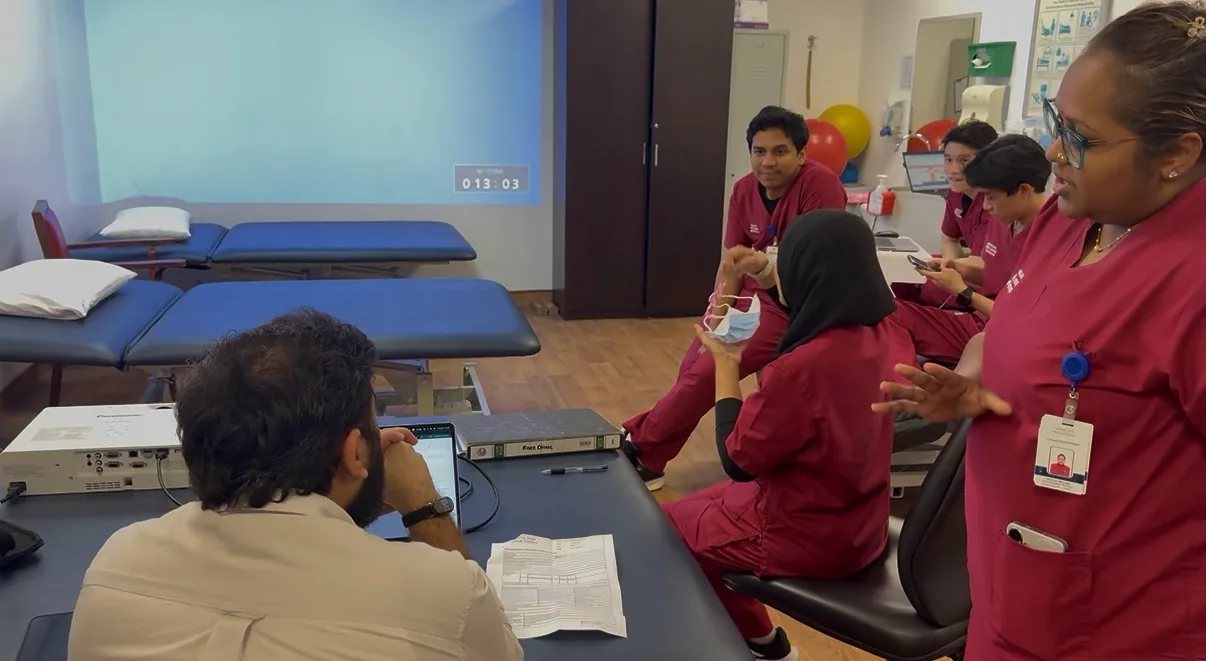
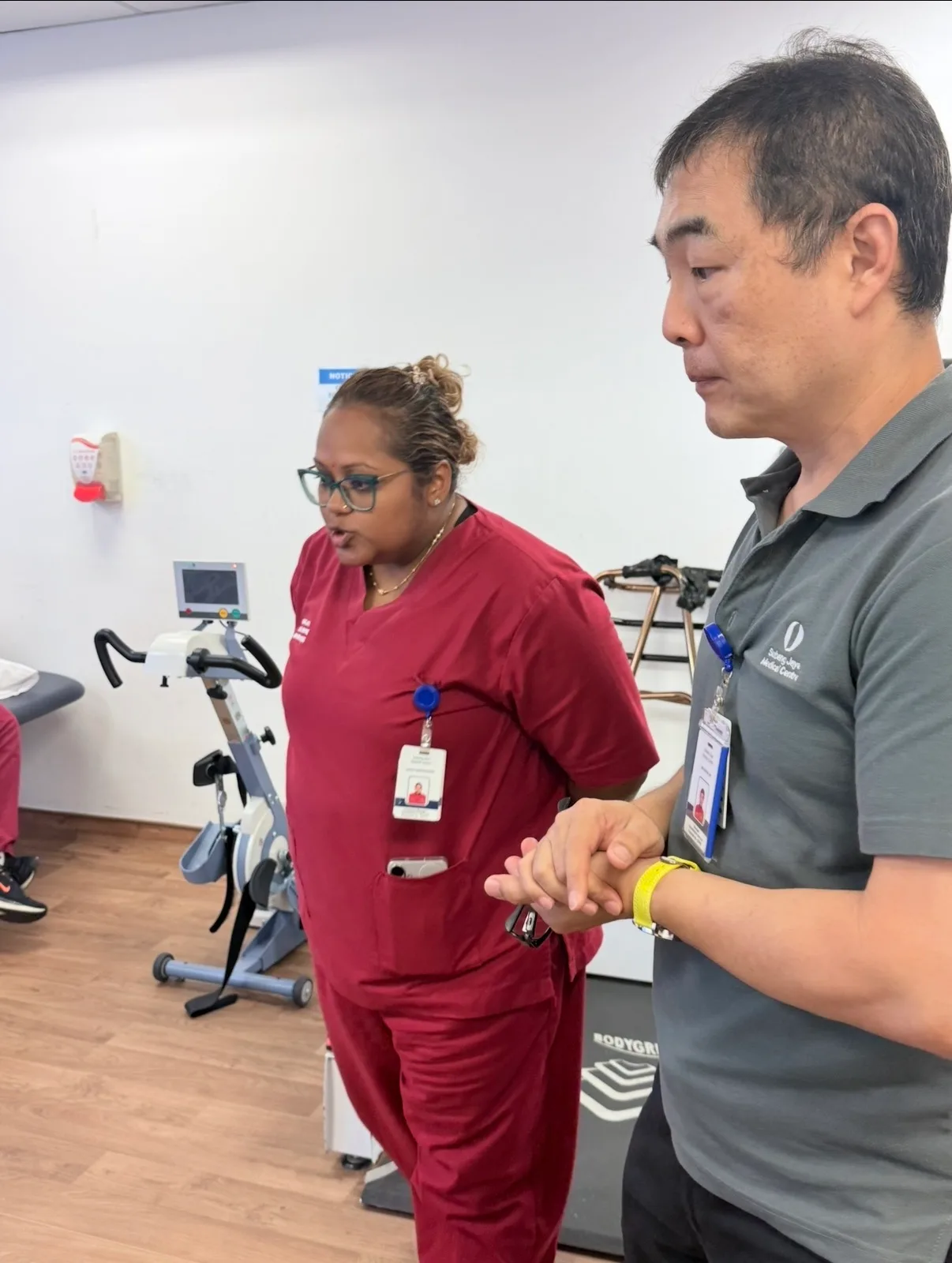
A knee replaced in the morning and walked on that afternoon is a knee that needs rehabilitation, and that is the department on Level 5 of the Mediplex. Rehabilitative Services is led by a rehabilitation medicine physician and staffed by physiotherapists, occupational therapists and speech therapists. It runs neuro-rehabilitation, cardiac rehabilitation, vestibular therapy, lymphoedema therapy and paediatric rehabilitation, on robotic rehabilitation systems, isokinetic machines and a virtual rehabilitation suite, and it sends physiotherapists out to patients' homes.
It is open Monday to Friday from nine until half past four, and on Saturday mornings. Its patients, and their doctors' letters, do not keep those hours.
A department that runs on a doctor's referral
Rehabilitation is not booked the way most things in a hospital are booked. Nobody walks into Rehabilitative Services and asks for a physiotherapy session. They are sent, by a doctor, with a referral, and the referral is the beginning of everything.
The letter says what is wrong. It says which part of the body is to be treated. It says how many sessions the patient is entitled to, and sometimes it names the therapist who is to deliver them. Every one of those facts governs what can happen next, and none of them arrives in a form a booking system can read.
It arrives as a photograph. Taken on a phone, sent over WhatsApp, frequently in the evening after the department has closed, and frequently a little out of focus. Somebody on the desk the next morning has to read it, work out what it covers, count the sessions, and see whether a therapist is named.
Then somebody qualified has to check that reading, because in a hospital a session count that is one out is not a clerical slip. It is a patient treated for the wrong thing, or told they have sessions they do not have.
Only after that does booking begin, and appointment booking in this department has more moving parts than most. Full name and date of birth, because a WhatsApp number is not a patient record. The right service for the right part of the body. A therapist who treats that part and has not already been assigned elsewhere. A day the patient can come. A slot the session fits into.
None of that is scheduling. It is administration, and it happens one patient at a time.
Nor does the work end when the appointment is in the book. Every session a patient attends comes off their entitlement. A cancellation made with enough notice leaves the count where it was. One made without it spends a session the patient will not get back. A patient who moves to Thursday the night before has cancelled, whatever they call it, and somebody has to know, and act.
When the letter's sessions run out, the patient needs a new letter, and somebody has to catch that before they arrive on Level 5 expecting treatment they are no longer entitled to.
Multiply that by every patient on a course, and every course running at once, and the department's ceiling stops being the number of therapists it has. It becomes the number of hours the front desk can find in a day that ends at half past four.
Why SJMC brought the workflow to watson.my
That is the workflow Subang Jaya Medical Centre brought to watson.my. Not a request for a chatbot, and not a request to answer WhatsApp faster. A request to take the reading, the counting and the matching off the desk, and to do it without changing how the department's therapists and doctors work or lowering the standard to which a referral is checked.
It is a harder brief than a general front desk. A system that answers questions and books slots is one thing. A system that can be handed a photograph of a doctor's letter at nine at night and know what to do with it, and what not to do, is another.
What watson.my built for the Rehabilitative Services front desk
Watson now reads the letter the moment it arrives, whatever the hour. It says back what it found in plain language, the part of the body, the number of sessions, the therapist if one is named, and asks the patient to confirm. If the photograph cannot be read, it asks for a clearer one, once, and never asks the patient to email it, bring it in or type it out.
Then it stops. The referral is held on the patient's record for the department to review, and nothing books until a member of the team has approved it. The patient is told the letter is being looked at and is not asked for it again. When the department approves it, the patient hears within moments, and the booking conversation begins.
A patient who has no referral is never asked for one. They are offered the first consultation, which needs no letter, and it is booked there and then. A patient who has a referral is never sent to the consultation by mistake.
Before any booking, Watson asks for the patient's full name and date of birth, together, once, and does not ask for a phone number, an email or an address, because the conversation is the contact. A returning patient whose details are on file is not asked again.
Where the department's note names a therapist, that therapist's days are the days on offer, and no others. Where the right way to deliver the sessions is a small supervised class of four led by a physiotherapist, that is what the patient is offered first, with one sentence on what it is, since most patients do not know their sessions can be taken that way.
And the counting is no longer anyone's memory. Sessions come off the entitlement as they are used. A cancellation with enough notice puts one back. One without does not, and the patient is told so at the time rather than discovering it later. When a referral is exhausted, the patient is told before they book, not after they arrive.
What is left on the desk is the part only the desk can do: the review of the letter, and the patient in the room.
Now under internal testing at SJMC
watson.my is now under internal testing at Subang Jaya Medical Centre's Rehabilitative Services. The department's own team is putting the system through its workflow, referral by referral, before a patient ever speaks to it.
That is the right order. A front desk that guesses is worse than one that does not answer, and a rehabilitation department cannot afford either. The letter goes in first, the checking goes in second, and the patients come last.
There is more to come. What the department finds in testing, and what changes as a result, will be reported here.
watson.my is built in Kuala Lumpur for Malaysian businesses that run on appointments, and it speaks the languages the country speaks. Subang Jaya Medical Centre's Rehabilitative Services is the first hospital department to put it through a referral. It will not be the last.
Related reading
Klinik Segara Solaris Dutamas puts Watson on the front desk
WhatsApp automation for business: what can actually be automated?