
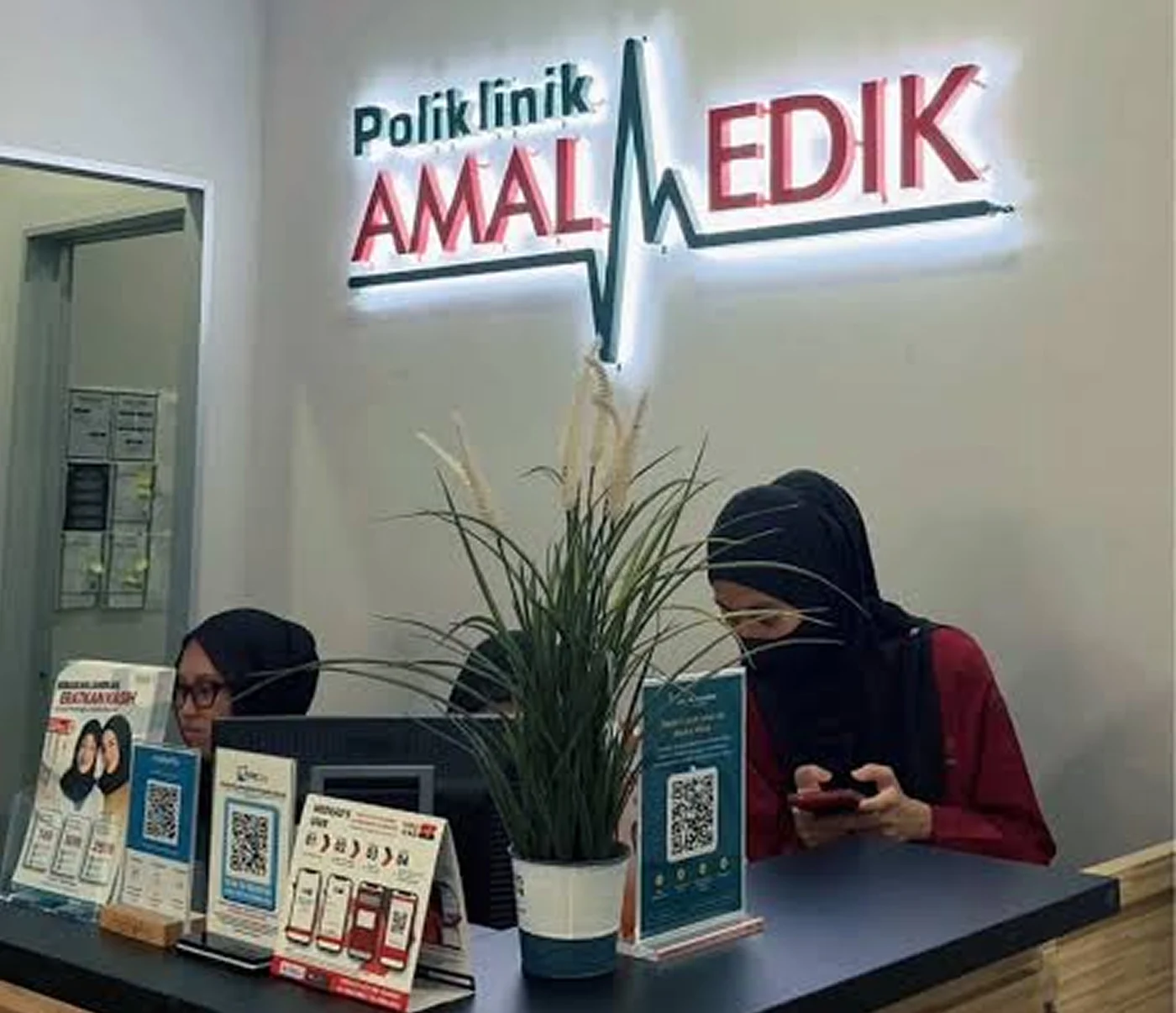
Established in 2017 under Kyno Primary Care Sdn Bhd, Poliklinik Amalmedik operates a growing network of clinics providing primary healthcare and a range of treatment services across Malaysia.
Amalmedik has expanded from three clinics in 2021 to 14 by 2024, the chain specialises in non-surgical and minimally invasive pain management and rehabilitation alongside its primary care, and it has served more than 100,000 patients. The group's ambition is to reach 120 clinics by 2029.
Growing at that rate means scaling operations exponentially, adding phones, messages, appointment books, patients who could be at any location, and a head office that needs visibility across their branches.
Poliklinik Amalmedik has engaged Watson to strengthen customer communication, operational visibility and business performance across their network.
What a growing network asks of its front desk
Patients walk in, the phone rings, someone messages to ask whether a treatment is offered and what it costs, and the counter handles all of it between the people already standing in front of it.
One clinic can hold that in its head. The staff know who called, who is waiting and who never came back.
A network cannot, and more importantly it cannot make decisions for the wider group without visibility. Each location has its own phone, its own WhatsApp, its own book, and the information stays where it happened.
The work is visible at the branch. It is the view across the branches that is hard to hold.
The calls that rang out at one clinic on a Tuesday afternoon reach no report. Neither is the patient who messaged at nine at night, got an answer the following morning, and by then had gone somewhere else. Nothing broke, nobody complained, and the network never sees the patients it did not get.
Every new clinic multiplies that, which is the awkward arithmetic of growth. The thing that makes a network valuable, more locations and more patients, is the same thing that makes its customer operations harder to see.
Why Amalmedik brought this to Watson
Not a chatbot for the website, and not a faster way to reply to WhatsApp.
Their objective was to streamline customer operations that work the same way at every clinic, that do not close when the clinic does, and that head office can see across without taking the day to day away from the branch that runs it.
Five key areas came out of it: visibility across the network, one place for conversations across all their channels, handling more of them and in more languages, promotions aimed at the right patients, and detailed analytics that show what is actually happening.
Greater visibility across the clinic network
The first is head office's view of activity across the branches.
Customer conversations and operational information no longer stay isolated at individual locations. Watson brings that activity together so the central team can see what is happening across the network, identify gaps and monitor performance consistently.
It is an intentional mix of branch-specific operations and centralised controls, which is the balance multi-branch clinic management has to strike. Each location keeps its own operating details, its own practitioners and its own schedule, and staff work in the clinic they are assigned to. Head office gets summaries it can filter by location and open when something needs attention, which is a different thing from every person seeing everything.
One place for customer conversations
Calls, WhatsApp and social messages arrive in one omnichannel inbox rather than in separate places at separate clinics.
Teams manage each conversation with the relevant context in front of them, instead of treating every call or message as a separate interaction with a stranger. A patient who called on Monday and messages on Thursday is the same patient, with the same history attached, whichever channel they chose and whoever picks it up.
Staff take over any conversation the moment they want it, and hand it back. The point is not to keep people out of the conversation. It is to stop the routine part consuming the day, so the part that needs a person gets one.
Handling more conversations, in more languages
For a multi-location healthcare business, customer demand does not arrive through one channel, in one language, or one conversation at a time.
Watson handles multiple calls and messages concurrently, across clinics, so a busy hour at one location is not a queue of missed calls at that location. A clinic's busiest hour and the hour it misses most are usually the same hour, and it is the one this is aimed at.
The same is true of the hours a clinic is shut, which over a week outnumber the hours it is open. Enquiries do not observe opening hours, and an answer the next morning is often an answer that arrives after the patient has booked elsewhere.
It works in English, Bahasa Melayu, Mandarin and Tamil, on the phone and in writing, so customers communicate in the language they are most comfortable using, and stay in it for the whole conversation.
More relevant customer promotions
A clinic network knows something most advertisers would pay for: who its patients are and what they came in for.
Instead of broad broadcasts, customer activity and history identify the relevant group for a given campaign, follow-up or reactivation effort. A message about a treatment goes to the patients that treatment suits, at the clinics where it is offered, rather than to everyone in the contact list.
Alongside that, Watson's Business Advisor identifies patterns across customer and business activity, surfaces areas that may need attention and recommends practical next steps. Which service is moving, which clinic is quiet, which campaign did nothing, where the diary has room. It is the work a growing network rarely has a free afternoon to do.
Clearer analytics across customer operations
Watson's analytics give Amalmedik a clear view of activity across the customer journey.
That covers calls, messages, leads, bookings, follow-up, promotions and other operational signals, so branch teams and head office can both see what is happening across the business and where attention is needed.
Every call is logged and transcribed, with the record of what was asked, what was answered and what was booked beside it. Handing the routine front desk work to a system is only worth doing if what it said and did can be checked afterwards.
The same figures read two ways. A clinic manager sees their own week. Head office sees the network, and can tell the difference between a quiet clinic and a quiet month.
How Watson goes in
Watson learns the clinic before it speaks for it. Services, prices, hours, which doctor does what, and what should go to a person rather than be answered. A front desk that guesses is worse than one that does not answer, so the knowledge goes in first and the phone is handed over second.
Across a network that happens clinic by clinic, with the group structure set up around it so each location keeps its own details while head office gets its view.
What we will report, and what we will not
Poliklinik Amalmedik has engaged Watson. That is the news, and this piece goes no further than that.
There is no recovered revenue figure here, no percentage of calls answered and no no-show rate, because nobody has measured them at Amalmedik yet. When there are results, they will be reported with the method attached and with the group's agreement. A number without its working is marketing wearing a report's clothes.
These areas connect into a single operating view: branch teams manage customer activity locally, and head office gets visibility across the wider clinic network.
Watson is built in Kuala Lumpur for Malaysian businesses that run on appointments, and it speaks the languages the country speaks. Amalmedik is among the first Malaysian clinic networks to put its customer operations behind one front desk. What that changes will be reported here.
Related reading
Klinik Segara Solaris Dutamas puts Watson on the front desk
Subang Jaya Medical Centre's Rehabilitative Services engages watson.my
PDPA Malaysia: what to check before automating customer communication